E-commerce Platform Development
Junior Project/Product Manager · 2023
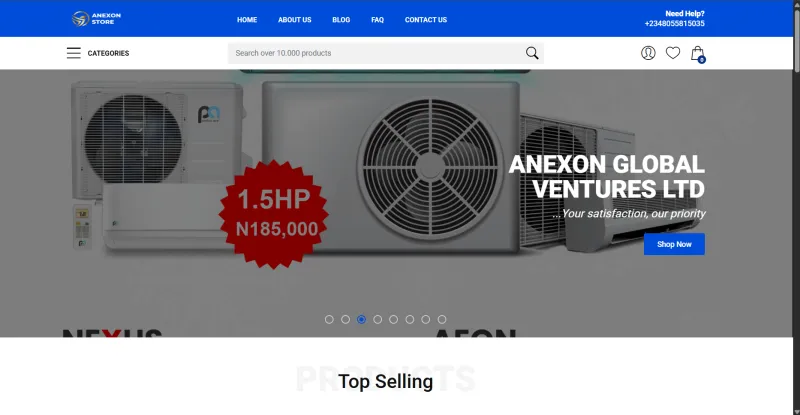
An e-commerce platform for all kinds of electronics
- Outcome:
- Deliery of an e-commerce website achieving 95% timeline adherence
- Jira
- PRD
- Change Log
- BRD
LuxeTrove is a two-sided marketplace MVP where owners and sellers of preloved luxury items could declutter, connecting buyers of affordable and high-quality products, promoting SDG 12—Responsible Production and Consumption
Luxe Trove is an online two-sided marketplace for authenticated, pre-loved luxury fashion in Africa. Sellers such as boutique owners, influencers, and individuals reach a wider audience. Buyers own designer pieces at a fraction of the original price. By extending the life of luxury goods, the product supports SDG 12, Responsible Consumption and Production.
The project started as a broad brief for a general secondhand marketplace. Structured discovery narrowed it to a focused, viable niche for an MVP.
The Problem
Luxury fashion is out of reach for most people in Africa because of its cost. That demand fuels a large market of low-quality counterfeits that wear out fast and add to waste. Owners of genuine pieces, meanwhile, lack a trusted way to resell them. Luxe Trove responds with accessibility, affordability and authenticity.
The Solution

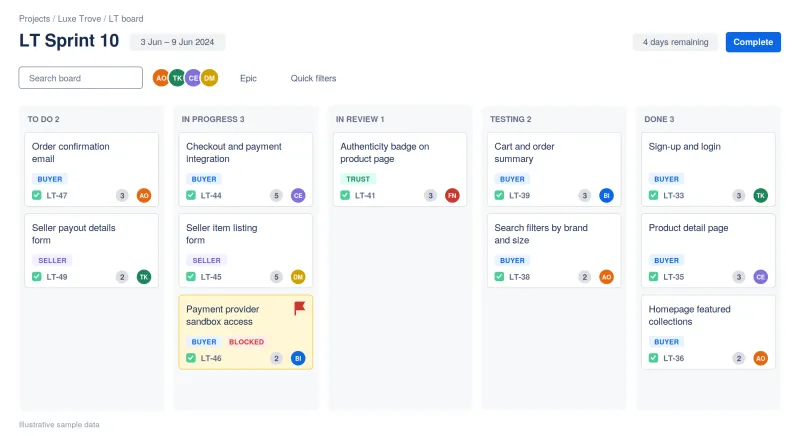
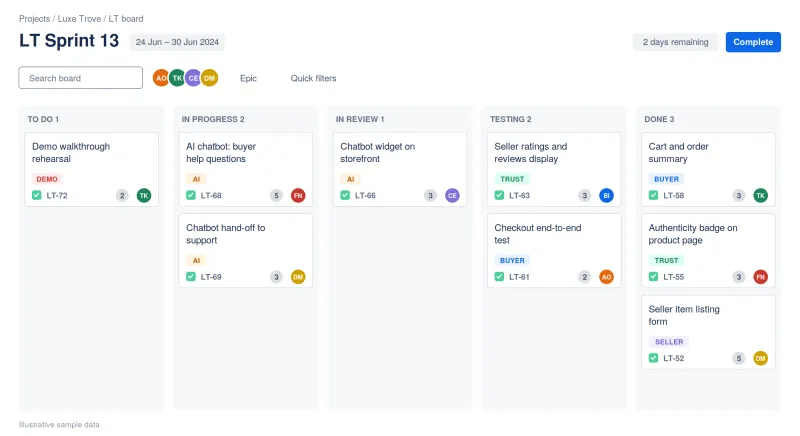
Facilitated the Scrum process in Jira and Miro (planning, reviews, retrospectives), starting sprints in discovery before development began
Coached the seven groups on Agile practices and introduced them to the team, ensuring they were followed consistently
Managed risks, dependencies and blockers through a RAID log, and actively resolved conflicts between groups
Partnered with the product owners on backlog prioritisation using MoSCoW, based on business objectives, user needs, urgency and risk
Enabled remote collaboration across time zones, including scheduling team meetings that worked for everyone
Branding and marketing: defined the brand identity, colour, logo, mission, and values.
Product managers: owned requirements and the PRD and prioritized features with the Scrum Masters
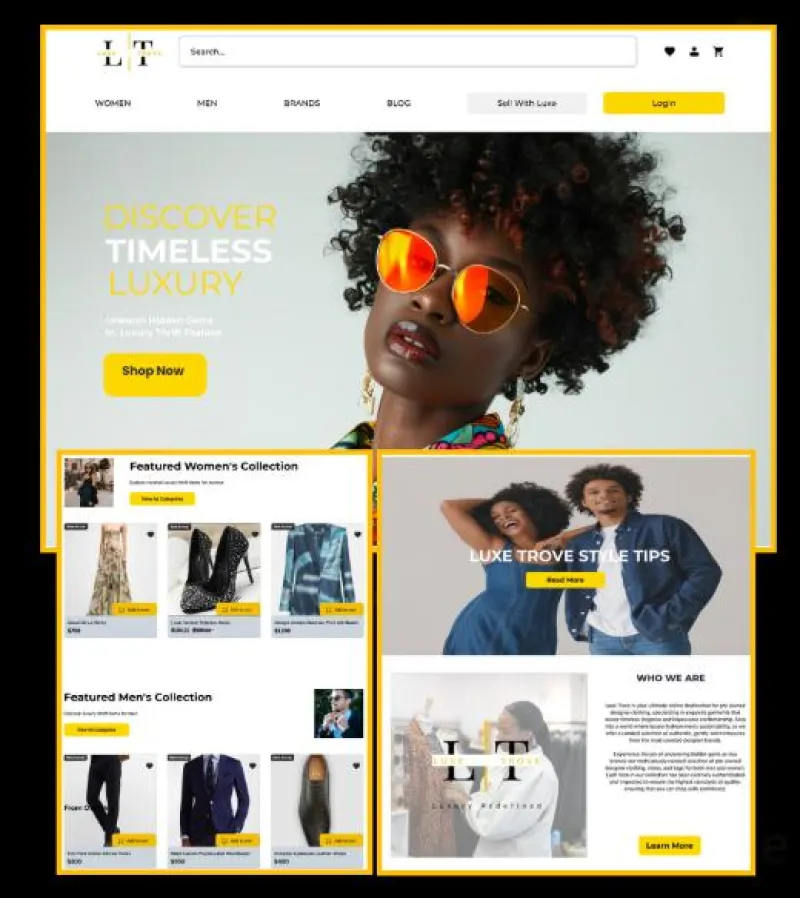
Product designers: worked with the product managers to understand user needs, then designed the user journeys, wireframes and the Figma prototype (UI/UX)
Front-end developers: built the buyer and seller interface
Back-end developers: built the APIs that connect the interface to the platform’s data and logic
The team used an Agile, Scrum-based approach: short iterations with incremental releases, so each sprint produced something stakeholders could review.
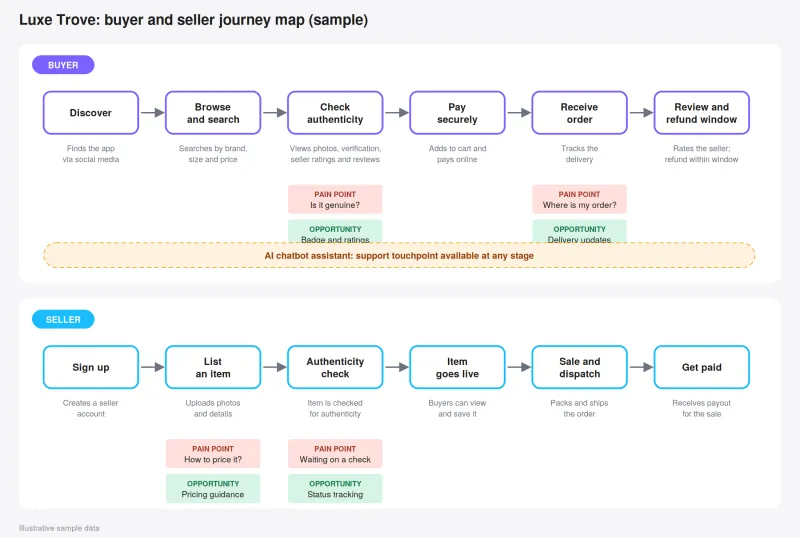
Discovery. Direct conversations with prospective buyers and sellers, a questionnaire survey, online market reports, and competitive analysis.
Evidence-based narrowing. Sellers most often wanted to resell luxury fashion, and buyers most wanted to buy it. We presented this in a sprint review, and stakeholders approved the focus.
Brand and requirements. The branding group defined the mission, vision, values and brand identity, while requirements and user journeys were gathered in parallel.
Design and build. Designers moved from user journeys to wireframes to a Figma prototype. Developers built against it in weekly sprints.
Pitch. A startup pitch and a live MVP demo for sponsors.
Schedule pressure. The team ran a little over two weeks past the planned timeline, partly because of scope creep. I re-ranked the backlog against the original product goal using MoSCoW, committed only to must-haves and deferred nice-to-haves.
Late design changes. Feedback on the user flow arrived after the interface was finalised, and views differed on reopening it. After facilitated discussions, with time short, the changes were implemented during development so delivery stayed on track.
Distributed collaboration. Contributors worked across countries and time zones, some travelling, with occasional connectivity problems. Polling the team for shared meeting windows kept everyone included.
Delivered a working MVP and presented a live demo on startup pitch day. The final scope was the must-have requirements only; nice-to-haves were left out because of the deadline.
Sponsors responded positively to the product and the pitch
Ran approximately 13 weekly sprints between April and July 2024
Despite scope creep, kept the overrun to a little over two weeks by proactively removing blockers and managing cross-team dependencies through a RAID log
Maintained roadmap alignment by partnering with the product owners on MoSCoW backlog prioritization, based on business objectives, user needs, urgency and risk, and refined user stories
Running sprints from discovery gives stakeholders evidence to decide with, not guesses.
Strict prioritization is the most useful Scrum tool under a fixed deadline.
Agree a design sign-off and change-request point early to avoid late rework.
Distributed teams need scheduling and communication agreements from the start.
Junior Project/Product Manager · 2023
An e-commerce platform for all kinds of electronics
Product Manager
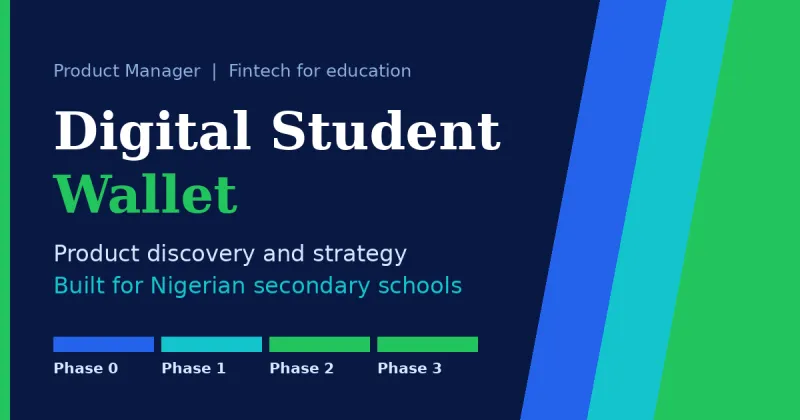
A fintech product concept for Nigerian secondary schools, boarding and non-boarding, taken from a raw idea to a validated, build-ready product before any code was written.
Project Manager · 2026
All-in-one school ERP and management software